Creating Space for Talent Requires Institutional Change
What women’s wrestling and my own experience in sport have taught me about building teams, structures, and leaders
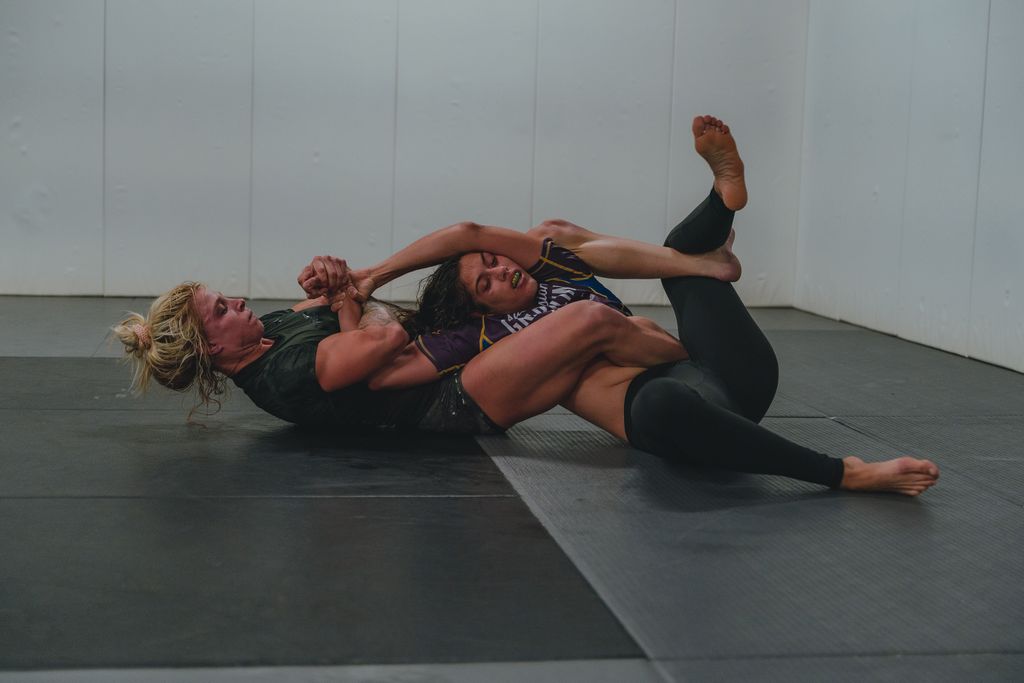
On a recent flight, I watched the biographical film Queen of the Ring about Mildred Burke, a pioneering professional wrestler. What stayed with me was the grit of the women’s story—and the discrimination and abuse they endured even when they were winning. As the film portrays it, established organizations and coaches offered few dependable routes for women to train and compete. Burke and other women had to build an organization of their own and create opportunities for the next generation.
I wrote this because Queen of the Ring raised a question that is personal to me: what should pioneering women athletes be able to leave for the next generation? Or any under resourced group – how can they carve out their niche and create something enduring?
Sport and team-building are personal for me. I was a state champion and nationally ranked fencer, and I started a fencing team at my high school. I then fenced varsity at a D1 university. I come from three generations of male high-school and college wrestlers. Both my children wrestle and my daughter is part of the next-generation: she competes against both girls and boys and aspires to coach.
In my professional work I also see the challenge of changing the culture and creating an enduring legacy. In career coaching, data governance, and AI governance, I look for what is changing, what evidence matters, and what people and structures need to do next. Women’s wrestling makes the question tangible: participation is growing, but lasting progress depends on building the roles, development paths, and decision structures around it.
Women’s wrestling is growing quickly in the United States. In the NCAA’s latest participation data, 1,738 student-athletes competed in women’s wrestling in 2024–25, a 42% increase from 2023–24. The inaugural National Collegiate Women’s Wrestling Championship was held March 6–7, 2026. McKendree won the first team title, edging Iowa 171–166. The championship marks a significant change in a short time.
The U.S. women’s team had already shown its strength at the Paris 2024 Olympics, winning four medals: two gold, one silver, and one bronze. U.S. men also medaled, with one silver and two bronze; no U.S. man won gold. Those results show elite performance alongside a college sport whose institutional footing is still expanding.
Growth changes what a sport needs from its institutions. Are there enough qualified coaches, safe and supportive programs, fair access to resources, clear development pathways, and decision-making structures that can keep pace?
Talent needs more than an opening. It needs excellent coaching, development, resources, and a path to contribute to the decisions that shape the sport. Women who have wrestled bring experience and visibility; women coaches and leaders are one important part of a strong system. The larger task is to make sure the entire structure can develop talent and help people grow into leadership.
That capacity takes deliberate work. It means inviting former athletes into coaching and leadership, giving people practical training and mentors, paying and supporting them, and creating routes into positions with authority. It also means looking at who is hired, who receives development opportunities, who gets trusted with responsibility, and who is still missing from the room where decisions are made. People should not have to rebuild the sport’s support system from scratch in every generation.
This is where my work in information and transformation leadership comes in. I help organizations see what is changing, what the evidence says, and where roles, accountability, and operating structures need to evolve. In wrestling, participation numbers tell only part of the story. Leaders also need information about programs, access to resources, coaching, development, retention, and decision authority. Together, those signals show whether the system is keeping pace with growth.
Change also needs ownership. A new championship creates visibility and opportunity, but it does not by itself build a healthy coaching and leadership system. Athletic departments, governing bodies, schools, and wrestling organizations have to decide who will develop that system, what support they will fund, and how they will know whether it is working.
There are already efforts aimed at coach development. USA Wrestling and Wrestle Like A Girl, for example, offer a course for current and aspiring coaches of girls’ and women’s wrestling that addresses inclusive coaching and positive team culture. That kind of work matters as part of a broader commitment: connect training to mentorship, paid opportunities, leadership roles, and institutions that take responsibility for building the support system.
The film sent me back to a question larger than the ring or the mat: when a field is changing, do its institutions build the capacity to help new talent participate, develop, and lead?
For me, this is the connection between sport and my work in information and transformation leadership. Whether an organization is responding to a growing sport, new technology, or another major shift, lasting progress depends on understanding what is changing and building the roles, accountability, and development paths needed to meet it. I want my daughter’s generation to inherit more than an opening; I want them to inherit institutions ready to help them thrive and lead.
Sources and Further Reading
- NCAA: Women’s sports reach record NCAA participation as leadership roles keep rising
- NCAA: Women’s wrestling becomes the 91st NCAA championship sport
- NCAA: The first women’s wrestling champions are crowned
- Team USA: Paris 2024 wrestling results
- USA Wrestling: Paris 2024 Olympic team history and results
- Sumerian Pictures: Queen of the Ring
- Miami Herald: Mildred Burke’s story in Queen of the Ring
- Wrestle Like A Girl: Teal Certification for current and aspiring coaches